
|
Gus DiZerega, Ph.D. – Independent Political Theorist |
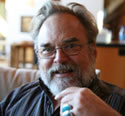
| Friday November 11, 2016 12:30-1:30 p.m. Dampeer Room Kelvin Smith Library Case Western Reserve University Dear Colleagues: Political commentators and advocates often claim the difference between the Republican and Democratic parties involves support for “big government.” Yet in fact, they differ not about how active government should be, but what government should be active about. The GOP wants to regulate the bedroom and not the market, and Democrats the reverse. On our party spectrum, the most consistently “anti-government party” is the Libertarians. Yet one could argue that both parties have factions that should be more comfortable as libertarians. So why hasn’t the libertarian party – or movement, or tendency, or in some cases cult – become more prominent in American politics? Libertarian activists may blame the rules of the game, the two-party monopoly, etc. But Gus DiZerega argues that the problems lie within the ideology and the movement. Since earning his Ph.D. in Political Theory at U.C. Berkeley, Dr. DiZerega has written extensively on libertarian themes such as spontaneous orders and the virtues of market systems. He describes himself as a “former libertarian,” and as a High School student received his first academic books (by Ludwig von Mises) from a young Charles Koch. So Gus writes from deep knowledge of the theories and the movement, when he raises questions such as how libertarianism fits with ecological reality; whether capitalism and private property are really protections against arbitrary power; and whether libertarian individualism can “comprehend the nature and value of political democracy.” All best regards, About Our Guests It’s a special pleasure to bring Gus Dizerega to campus. Gus is one of my friends from graduate school at U.C. Berkeley, where he earned his Ph.D. in political theory in 1984. He has taught at St. Lawrence University, Whitman College, and the University of Puget Sound, among many other professional and research activities. But he has never been easy to characterize, nor fit easily into the various disciplinary trends, because he is simply too broad and original a thinker. As I note above, Gus has rich (in both senses) roots in libertarian thinking. That enables him to see angles that others might not, such as the difference between a tradition grounded in Friedrich Hayek and Ludwig von Mises, and the tradition based on Ayn Rand. He continues to work on the dynamics and advantages of “self-organizing systems” – as markets, at their best, are in part. Yet I became a fan of his work when, as a student, I read chapters of his dissertation on citizenship and participation – in which among other things he discussed Aristotle, James Madison, and Robert Dahl, and analyzed the relationship between friendship and politics. Gus is an intensely humanistic scholar, and interested in all dimensions of human experience. That has led him in some work away from political theory and into issues of spirituality and especially pagan thought and its relationship to Christianity. Many of his interests are brought together in Fault Lines: The Sixties, the Culture War, and the Return of the Divine Feminine (2013). In that book he argues that current divisions developed in part from the turmoil of the ’60s, but that the ’60s themselves were a response to how both secular and spiritual assumptions of modernity challenge peoples’ ability to live together. Where We Meet The Friday Public Affairs Lunch convenes each Friday when classes are in session, from 12:30 p.m. to 1:30 p.m. Our programs are open to all and no registration is required. We usually meet in the Dampeer Room of Kelvin Smith Library. The Dampeer Room is on the second floor of the library. If you get off the elevators, turn right, pass the first bank of tables, and turn right again. Occasionally we need to use a different room; that will always be announced in the weekly e-mails. Parking Possibilities The most convenient parking is the lot underneath Severance Hall. We regret that it is not free. From that lot there is an elevator up to street level (labeled as for the Thwing Center); it is less than 50 yards from that exit to the library entrance. You can get from the Severance garage to the library without going outside. Near the entry gates – just to the right if you were driving out – there is a door into a corridor. Walk down the corridor and there will be another door. Beyond that door you’ll find the entrance to an elevator which goes up to an entrance right inside the doors to Kelvin Smith Library. Schedule of Friday Lunch Upcoming Topics and Speakers: November 18: Can Democracy Meet the Challenge of Polarization? With Mark Chupp, Assistant Professor, Jack, Joseph and Morton Mandel School of Social Sciences. November 25: Thanksgiving Break. December 2: Putin’s Russia. With Kelly M. McMann, Associate Professor of Political Science and Director, International Studies Program. December 9: Health Care Report Cards – Time for Second Thoughts? With J.B. Silvers, John R. Mannix Medical Mutual of Ohio Professor of Health Care Finance. |