
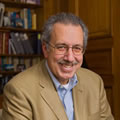
 Richard E. Boyatzis, Ph.D. – Distinguished University Professor and H. R. Horvitz Chair of Family Business, Departments of Organizational Behavior, Psychology, and Cognitive Science at Case Western Reserve University |
| Friday November 11, 2011 12:30-1:30 p.m. Dampeer Room Kelvin Smith Library Case Western Reserve University Dear Colleagues: We tend to think that universities have a distinct mission (such as “research,” “teaching,” or “extending and preserving knowledge”) but that all for-profit organizations have a generic mission, namely making money. Yet the profit-motive is too generic to tell managers how to define their organizations’ tasks, motivate employees, or represent their organization to the public. And universities certainly have to worry about their financial positions. How different, then, are the tasks of leading either businesses or universities? Professor Boyatzis argues that a leader, executive or manager is only effective if he or she has shown adaptability over the long term and is seen as a major contributor by multiple stakeholders around him or her – such as employees, customers/clients/students/patients, investors, vendors/suppliers, and the community at large as well as specifically. What might this mean in practice? Join us for a discussion that could help us think about both the business world and universities. Very best regards, About Our Guest… Using his well-established Intentional Change Theory (ICT) and complexity theory, Richard Boyatzis has continued to research how people and organizations engage in sustainable, desired change. The theory predicts how changes occur in different groups of human organizations, including team, community, country and global change. Ongoing research supporting this theory includes developing new and better measures of an individual’s emotional, social and cognitive intelligence as well as studies that demonstrate the relationship between these abilities and performance. the latest research includes fMRI studies to establish neuro-endocrine arousal of coaching to the Positive Emotional Attractor and resonant leadership. Where We Meet This year the Friday Public Affairs Lunch will convene each Friday when classes are in session in the Dampeer Room of Kelvin Smith Library from 12:30 pm to 1:30 pm. The Dampeer Room is on the second floor of the library. If you get off the elevators, turn right, pass the first bank of tables, and turn right again. Parking Possibilities The most convenient parking is the lot underneath Severance Hall. We regret that it is not free. From that lot there is an elevator up to street level (labeled as for the Thwing Center); it is less than 50 yards from that exit to the library entrance. There is also on-street parking on both East Drive and Bellflower. Both are fairly short walks from the library. Friday Lunch Upcoming Topics and Speakers: November 18: Wikipedia in the University. Peter Shulman, Assistant Professor of History. November 25: No Session – Thanksgiving Break December 2: University Circle Update. Steven Litt, Architecture Critic, Cleveland Plain Dealer December 9: Outsourcing and Offshoring Legal Services. Cassandra Burke Robertson, Associate Professor of Law |